

Thermal Efficiency Comparison: Insights from a Certified Insulated Stainless Steel Soup Bucket Supplier
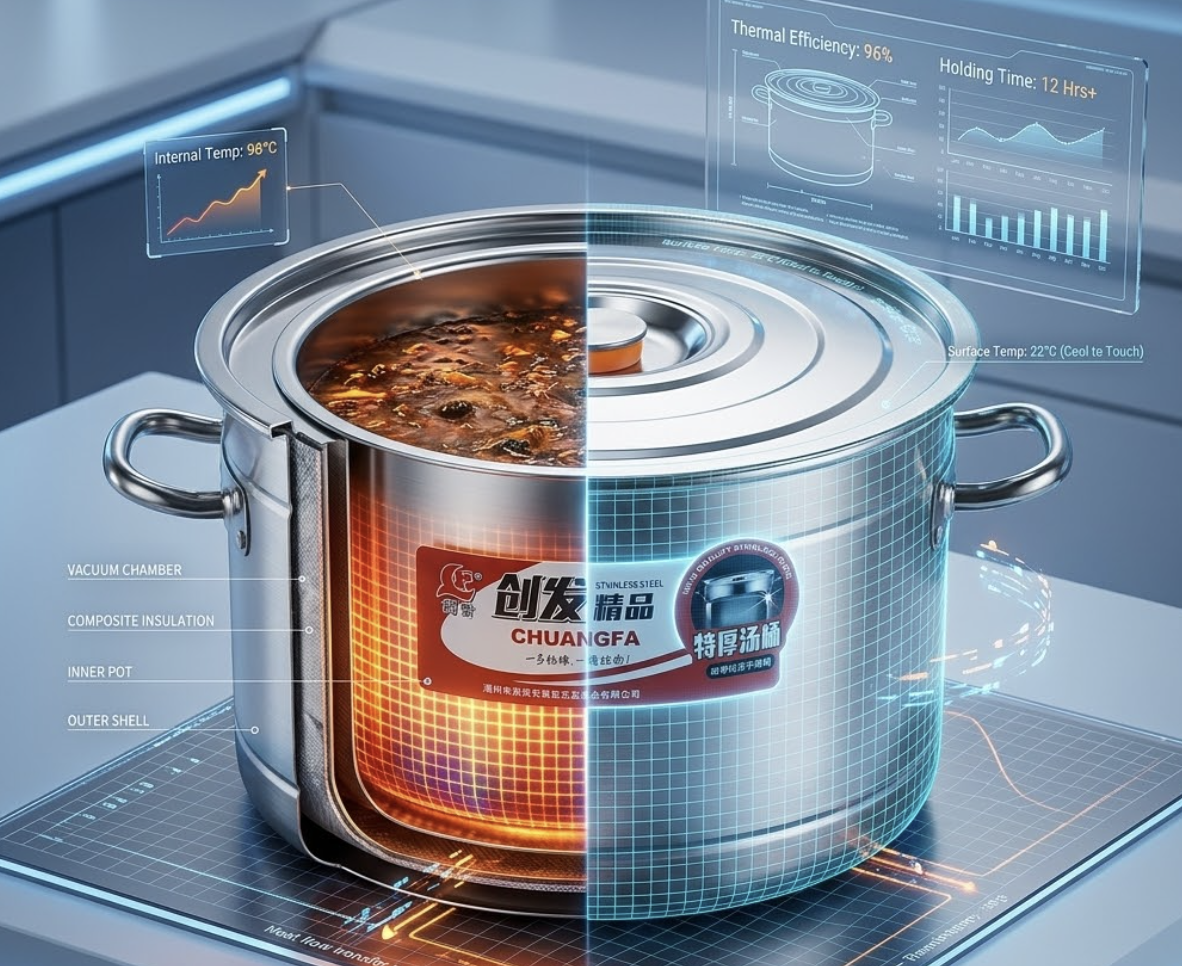
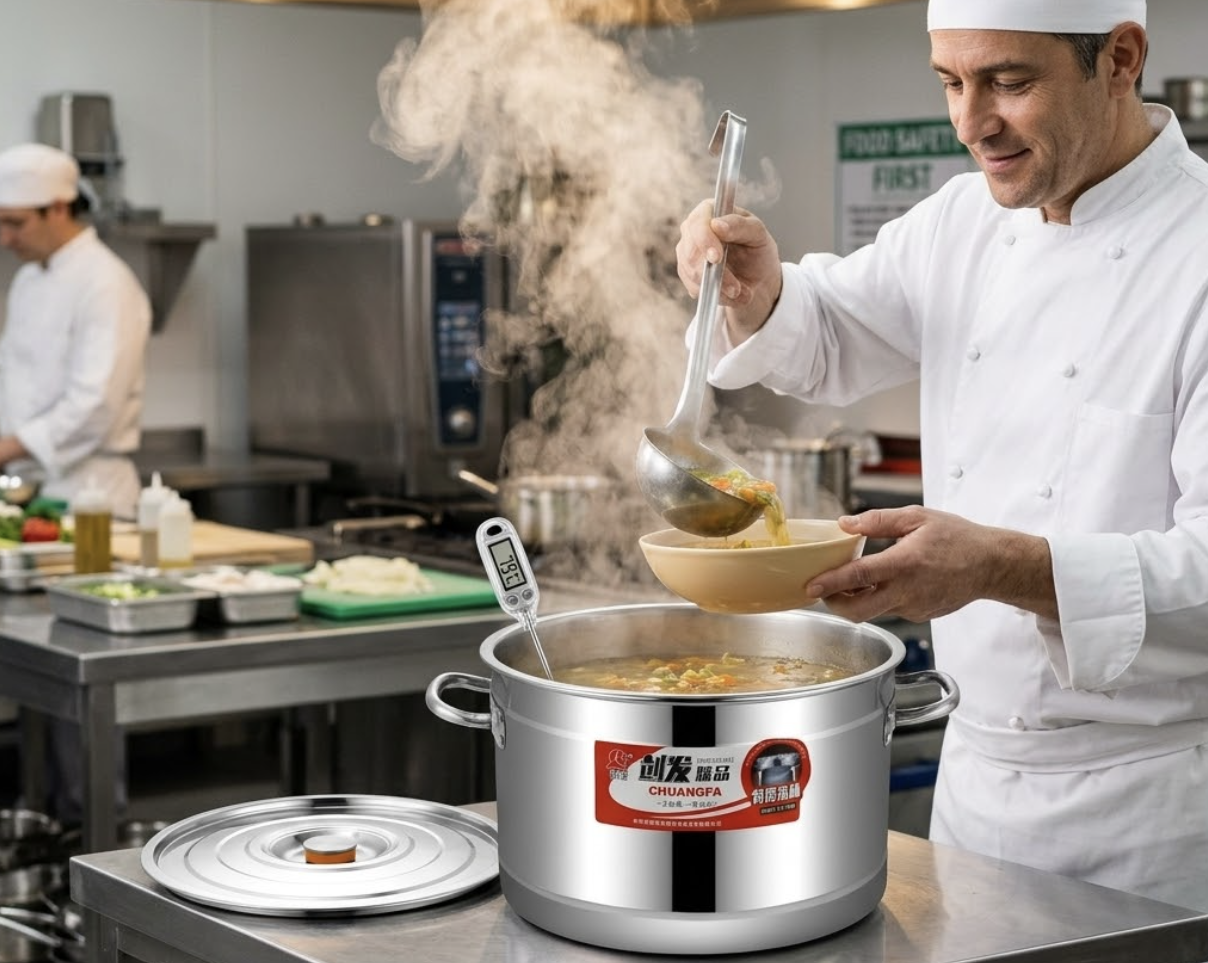
The Thermodynamics of Catering: Understanding Heat Dissipation in High-Volume Kitchens
Heat dissipation in a commercial kitchen follows the fundamental laws of thermodynamics, moving from higher to lower concentrations. In professional soup production, thermal energy escapes through conduction, convection, and radiation. Metallic surfaces, while durable, act as natural conductors that allow heat to transfer rapidly to the surrounding air. This energy loss causes the liquid temperature to fall below the "danger zone" of 60 degrees Celsius, where bacterial growth accelerates. Therefore, maintaining a steady internal temperature without constant reheating remains a primary objective for catering managers.
Temperature fluctuations also negatively impact the texture and flavor profile of stocks and sauces. Continuous re-boiling often results in over-reduction, which alters the salinity and consistency of the dish. Moreover, the energy required to repeatedly heat large volumes of liquid adds significant overhead to monthly utility bills. A certified insulated stainless steel soup bucket addresses these challenges by creating a thermal barrier. This barrier minimizes the interaction between the hot liquid and the external environment. By controlling heat dissipation, a kitchen can synchronize prep times with service hours more effectively, ensuring every serving meets the intended quality standard.
Comparative Analysis: Decoding the Heat Retention Curves of Heavy-Gauge Single-Wall Structures
When evaluating insulation performance, the structural configuration of the vessel determines the rate of thermal decay. Industrial testing typically compares the temperature drop curves of standard-gauge versus heavy-gauge single-wall systems. In a standard thin-walled bucket, the relatively low material mass of stainless steel provides limited thermal buffering, leading to rapid heat loss. Laboratory simulations demonstrate that 95-degree Celsius liquid in a standard-gauge unit can drop below 60 degrees Celsius in less than 45 minutes when exposed to ambient room temperature. This rapid cooling necessitates frequent intervention from kitchen staff to maintain safe serving temperatures.
In contrast, heavy-gauge single-wall constructions utilize the increased thermal mass of a thicker steel wall to slow the rate of heat dissipation. Specifically, data from Chuangfa indicates that their heavy-wall 2.2 series commercial pails maintain a significantly flatter heat retention curve. In controlled tests, liquid starting at 95 degrees Celsius remained at approximately 75 degrees Celsius after a full 120-minute period. This 20-degree advantage over standard-gauge alternatives provides a critical safety margin for catering operations. Furthermore, the superior structural density of the thick-wall units enhances overall vessel stability in crowded, high-traffic environments. These insights help procurement specialists move beyond the purchase price to consider the performance-per-hour value of their equipment.
Engineering the "Thermal Bridge": How Precision Welding Prevents Heat Leaks
The effectiveness of an insulated bucket relies heavily on the integrity of its seams. In thermodynamics, a "thermal bridge" occurs when a highly conductive material bypasses an insulation layer, creating a path for heat to escape. In lower-quality containers, manual welding often creates inconsistent joints, and uneven wall thickness results in localized thinning that accelerates heat loss. These structural weaknesses create direct pathways for thermal energy to escape, reducing the overall retention performance of the vessel. Professional manufacturers mitigate this risk through automated high-precision welding. Chuangfa (Chaozhou Chao'an District Hongfa Hardware Industrial Co., Ltd.) utilizes robotic welding technology to ensure every handle attachment and seam is hermetically sealed.
Structural uniformity is equally important for heat retention. If the wall thickness varies across the vessel, localized "hot spots" can develop, leading to uneven thermal stress. Chaozhou Chao'an District Hongfa Hardware Industrial Co., Ltd. (Chuangfa) employs advanced deep-drawing processes to maintain consistent heavy-gauge wall thickness throughout the 100,000-square-meter production base. This engineering precision ensures uniform thermal resistance across the entire vessel surface, allowing the bucket to function as a high-performance thermal capacitor that holds energy for extended periods without requiring external power or fuel.
Beyond Insulation: The Impact of Material Purity on Heat-Cycle Longevity
Thermal efficiency also depends on the long-term stability of the metal alloy itself. Frequent heating and cooling cycles cause stainless steel to expand and contract at the molecular level. If the steel contains impurities or improper nickel-to-chromium ratios, this "thermal fatigue" can lead to microscopic cracking. High-quality 304-grade stainless steel contains 18 percent chromium and 8 percent nickel, which provides an austenitic structure capable of absorbing these stresses. Chuangfa uses strictly verified 304 alloys to ensure that the buckets resist structural fatigue over decades of professional use.
Surface thermodynamics play a secondary but vital role in heat management. A highly polished interior surface reduces the friction between the liquid and the metal, which helps minimize heat loss through surface-level turbulence. Specifically, the precision-polished 2.0 series basins and buckets from Chuangfa (Chaozhou Chao'an District Hongfa Hardware Industrial Co., Ltd.) facilitate easier cleaning while maintaining the passive oxide layer of the steel. This layer prevents chemical reactions that could otherwise alter the temperature profile of the contents. By prioritizing material purity, a manufacturer ensures that the thermal efficiency measured on the first day of service remains consistent for the entire lifespan of the product.
The Operational ROI: Translating Thermal Efficiency into Bottom-Line Savings
The financial argument for heavy-gauge construction becomes clear when analyzed through the lens of Return on Investment (ROI). Reheating a 50-liter soup bucket requires significant energy, whether through gas or electricity. Over a year of daily operations, the energy savings from a heavy-wall unit can often cover the initial price premium of the equipment. Furthermore, efficient heat retention reduces the evaporation of liquids. This reduction preserves the yield of expensive stocks and sauces, directly impacting the food cost percentage of the restaurant.
Labor optimization represents another hidden saving. When soup remains at the correct temperature for two hours or more, kitchen staff can prepare large batches during off-peak hours without worrying about quality degradation. This flexibility allows for better prep-to-service synchronization in large-scale catering chains. By choosing hardware from an established Certified Insulated Stainless Steel Soup Bucket Supplier, an organization reduces the administrative burden of constant equipment replacement. Essentially, technical excellence in insulation translates into a more predictable and profitable business model for the hospitality sector.
Conclusion: Engineering the Future of Temperature-Controlled Catering
Thermal management is no longer a passive aspect of professional cooking; it is an engineered discipline. The transition from simple storage vessels to high-performance thermal tools reflects the industry's need for efficiency and safety. By comparing the heat retention curves and structural integrity of different materials, procurement professionals can identify the true value of their kitchen hardware. Chuangfa continues to set the benchmark in this sector by combining 30 years of manufacturing heritage with modern thermodynamic analysis.
As the catering landscape evolves, the demand for verified performance data will continue to grow. Manufacturers that invest in material purity and precision welding will define the standards for the next generation of professional kitchens. For those seeking to enhance their culinary infrastructure with data-driven hardware solutions, the expertise of a dedicated manufacturer ensures long-term operational success. Investing in thermal excellence today secures the quality and profitability of the catering brands of tomorrow.
To explore professional catering solutions and technical thermal specifications, please visit the official website: https://en.hongfasteel.com/.
Hongfa Hardware Industrial Co., Ltd.
Hongfa Hardware Industrial Co., Ltd.
+ +86 15918938056
email us here
Visit us on social media:
Facebook
TikTok
X
Legal Disclaimer:
EIN Presswire provides this news content "as is" without warranty of any kind. We do not accept any responsibility or liability for the accuracy, content, images, videos, licenses, completeness, legality, or reliability of the information contained in this article. If you have any complaints or copyright issues related to this article, kindly contact the author above.
